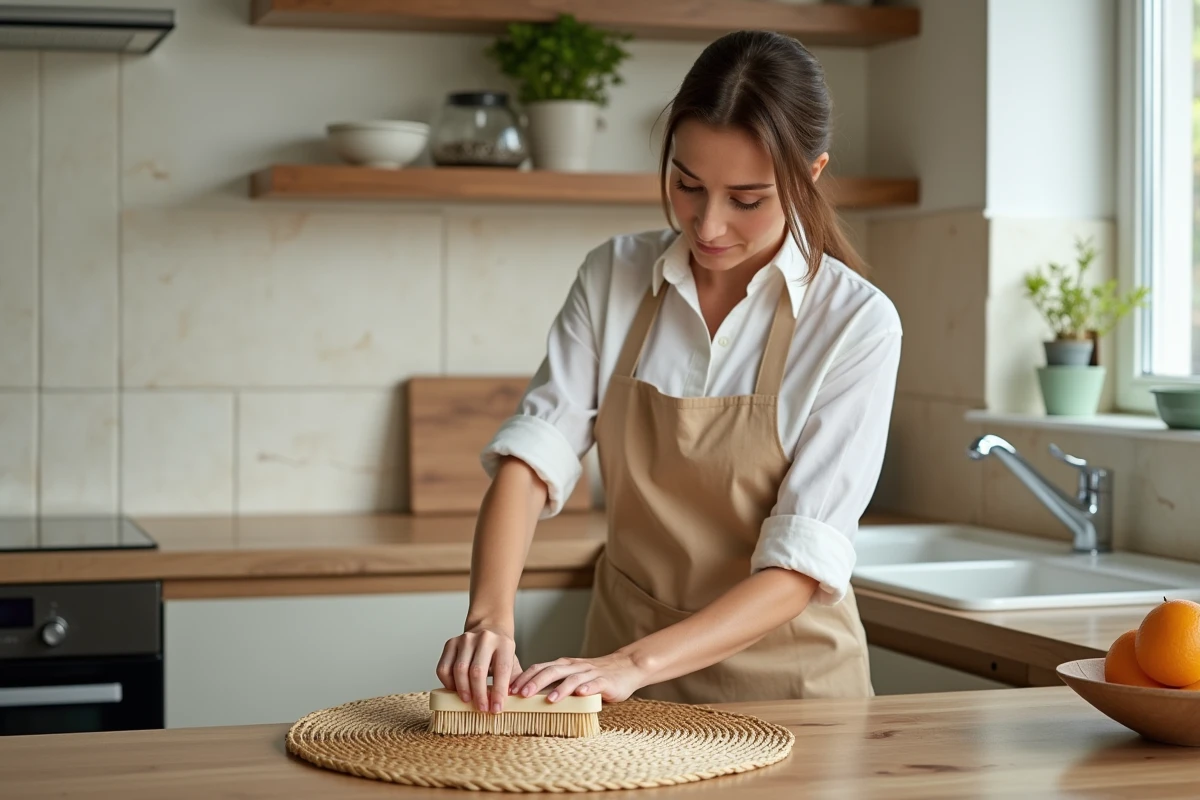
Natural straw placemats pose a cleaning problem that few table materials share: their woven fibers absorb moisture, trap crumbs in the crevices, and lose their color with the slightest excess of water. Knowing how to clean straw placemats without damaging them requires choosing the right method according to the type of dirt, frequency of use, and the exact composition of the placemat.
Natural straw or hybrid straw: two materials, two cleaning protocols
Not all placemats sold as “straw” react the same way to water and household products. Since 2025, hybrid straw-bio-based polyethylene models have appeared on the market, according to a technical bulletin from INRAE dedicated to innovative agro-textile materials. This distinction radically changes the approach.
| Criterion | Natural straw (raffia, bulrush, wicker) | Hybrid straw (bio-based straw-PE) |
|---|---|---|
| Moisture resistance | Low: fibers swell and deform | Good: PE protects fibers from absorption |
| Mold risk | High if not dried completely | Moderate, but air drying recommended |
| Preferred method | Dry brushing, occasional damp cleaning | Warm soapy water, soft sponge |
| Products to avoid | Bleach, harsh detergents, immersion | Chemical solvents, washing machine |
| Drying | Flat, air-dried, away from any heat source | Air-dried, flat |
For natural straw placemats, prolonged contact with water remains the main factor of degradation. The plant fibers swell, soften, and then contract as they dry, which weakens the weaving. Hybrid models tolerate moisture better but develop mold if stored while still damp.
To delve deeper into each step of the process, you can clean a straw placemat on Tendances Déco where techniques are detailed by fiber type.
Dry brushing vs. damp washing: results on the lifespan of straw placemats
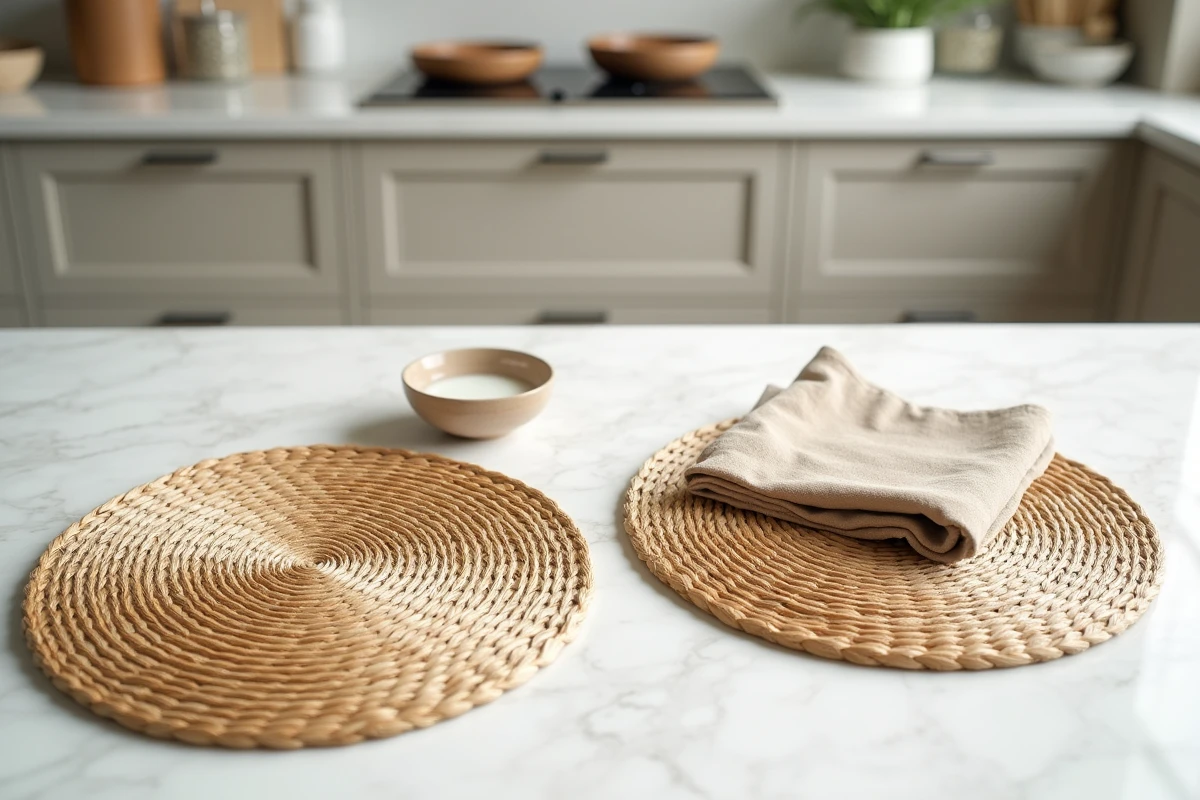
The Culinary Academy of France published a case study in April 2026 on the maintenance of tableware in restaurants. The results show that alternating dry brushing and cold steam extends the lifespan by 40% compared to intensive damp washing. Discoloration, the main sign of aging, appears much faster when placemats are regularly soaked.
Daily dry brushing
A soft-bristled brush is sufficient to dislodge crumbs and dust from the crevices of the weaving. The motion should follow the direction of the fibers, never against them, to avoid lifting the strands. This reflex after each meal prevents dirt from embedding and reduces the frequency of damp cleanings.
Occasional damp cleaning
When a stain persists, a wrung cloth soaked in warm water and Marseille soap allows for scrubbing the area without saturating the fibers. The critical point: never immerse a natural straw placemat. Water should remain on the surface, applied locally.
For stubborn stains (greasy sauce, wine), a cotton swab moistened with household alcohol yields good results in hard-to-reach areas. A quick rinse with a damp cloth removes product residues.
Mold and allergen treatment: an often-overlooked angle for straw placemats
Plant fibers provide a conducive environment for the development of dust mites and mold spores, especially in humid rooms or during the summer. For households concerned about allergies, regular cleaning is not always sufficient.
- Always dry placemats flat and in the open air after any contact with water. Incomplete drying promotes fungal proliferation within hours, especially on natural straw.
- Apply a hypoallergenic anti-mold treatment (diluted white vinegar spray or baking soda solution) once a month on both sides of the placemat.
- Store placemats in a dry, ventilated area, never stacked while damp or locked in a drawer without air circulation.
Diluted white vinegar in equal parts with water serves a dual purpose: it neutralizes mold spores and eliminates odors absorbed by the fibers. The application is done with a spray bottle, followed by complete air drying.
Soda crystals and hydrogen peroxide: restoring a heavily soiled straw placemat
When brushing and Marseille soap are no longer sufficient, two solutions can help recover a very dirty placemat without destroying the fibers.
The first involves preparing a solution of soda crystals diluted in hot water. This mixture is applied with a soft brush, gently scrubbing the soiled areas. Soda crystals degrease the fibers without bleaching them, preserving the natural color of the straw.
The second option uses hydrogen peroxide for placemats that have turned gray. A brush soaked in water mixed with hydrogen peroxide can restore a lighter appearance. This method is aggressive for the fibers: it should only be used once or twice a year, never for regular maintenance.
- Soda crystals: suitable for greasy stains and general soiling, without altering the color.
- Hydrogen peroxide: reserved for de-graying tarnished placemats, with a risk of drying out the fibers if used too frequently.
- Lemon: locally applied lemon juice helps lighten a yellowed area, but its acidity weakens the weaving with repeated use.
Protecting after deep cleaning
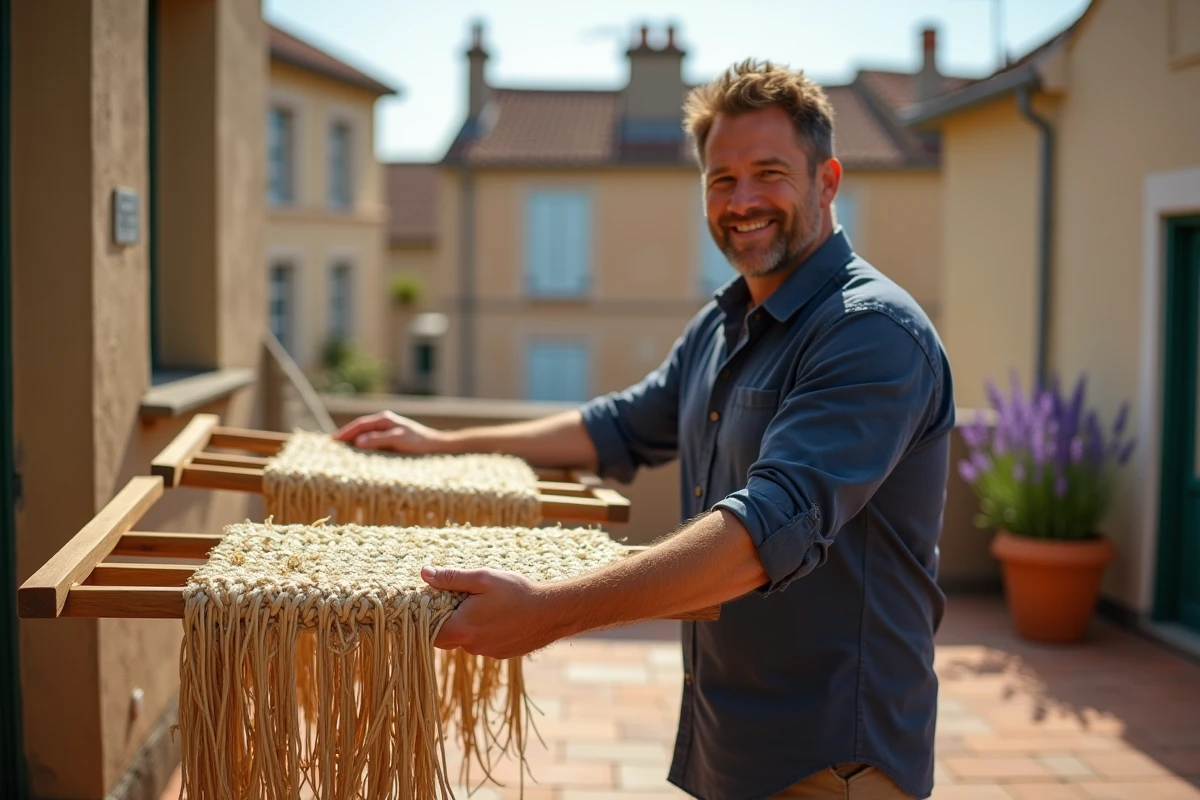
A restored placemat remains vulnerable until its fibers have been nourished. A thin layer of linseed oil applied with a soft cloth restores flexibility and shine to the straw after intensive cleaning. The oil penetrates the fibers, limits moisture absorption, and delays the next soiling.
Always dry the placemat flat, out of direct sunlight, for several hours before reusing it. Direct heat (radiator, hairdryer) causes uneven drying that cracks the strands and weakens the weaving. A well-dried and oiled placemat retains its shape for several months without requiring another deep cleaning.