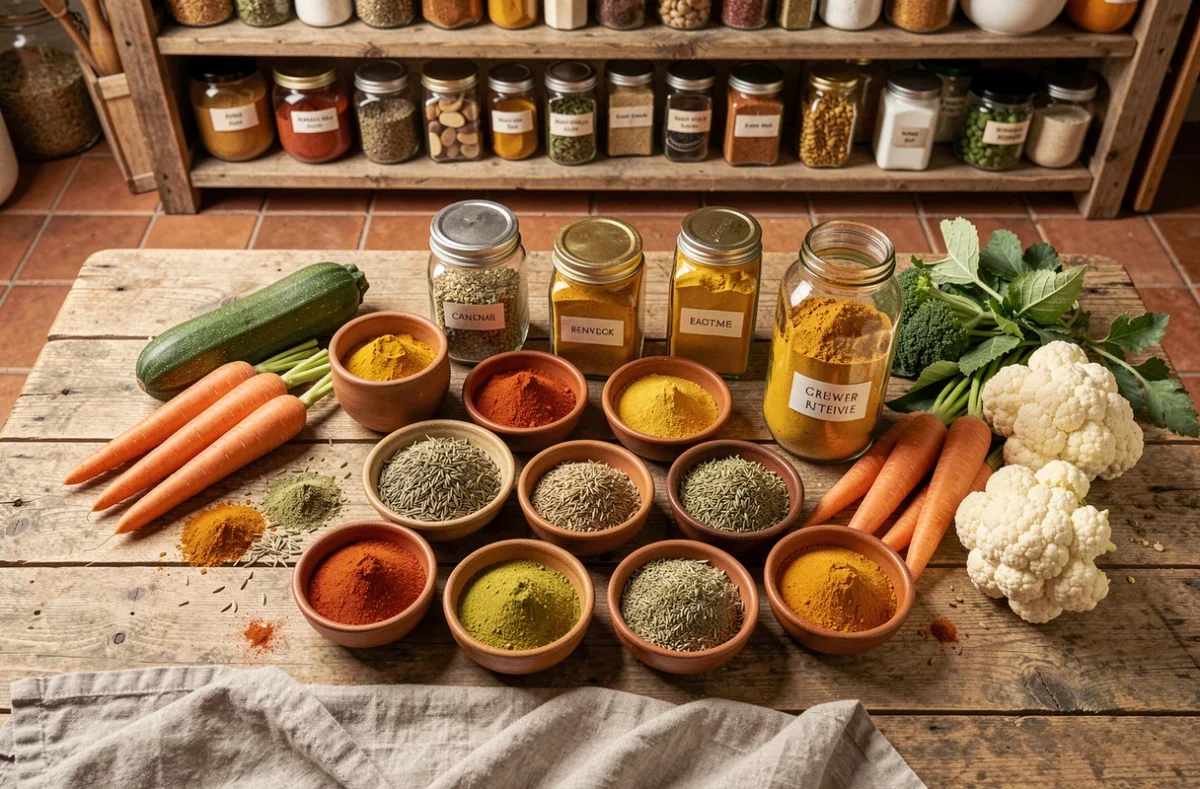
Not all spices behave the same way when exposed to the heat of an oven or the fat of a béchamel. Some release their aromas within the first few minutes of cooking, while others lose their appeal if not added at the last moment. To enhance the flavor of your vegetables and gratins, the choice of spice matters, but the timing of when you incorporate it and the quantity used are equally important in the final result.
Spices at the Beginning or End of Cooking: The Game-Changing Factor
The same cumin can yield two very different results depending on whether it is added to hot oil before the vegetables or sprinkled on the dish right out of the oven. According to Les Docus (article updated on October 2, 2026), whole spices benefit from being roasted or infused at the beginning of cooking, while delicate powders and fresh ginger retain their freshness better when added at the end of preparation.
This distinction is rarely addressed in seasoning guides, which focus on the choice of spice without specifying when to incorporate it. For a gratin, freshly grated nutmeg directly into the hot béchamel spreads its aroma throughout the sauce. In contrast, smoked paprika sprinkled on the crust just before baking retains its character without becoming bitter.
| Spice | Appropriate Time to Add | Type of Dish |
|---|---|---|
| Cumin (seeds) | Beginning of cooking, in fat | Roasted vegetables, sautéed carrots |
| Cumin (powder) | Mid-cooking or at the end | Vegetable gratins, purées |
| Nutmeg | Incorporation into hot sauce | Creamy gratins, béchamel |
| Smoked paprika | End of cooking or on the crust | Roasted vegetables, golden gratins |
| Fresh ginger | End of preparation | Sautéed vegetables, squashes |
| Coriander (seeds) | Beginning of cooking, lightly crushed | Stewed vegetables, ratatouille |
| Curry (blend) | Mid-cooking, in a liquid | Coconut milk gratins, braised vegetables |
Among the resources detailing these associations, the list of spices on Mon Blog Cuisine offers a complementary overview to refine your choices based on the type of vegetable.
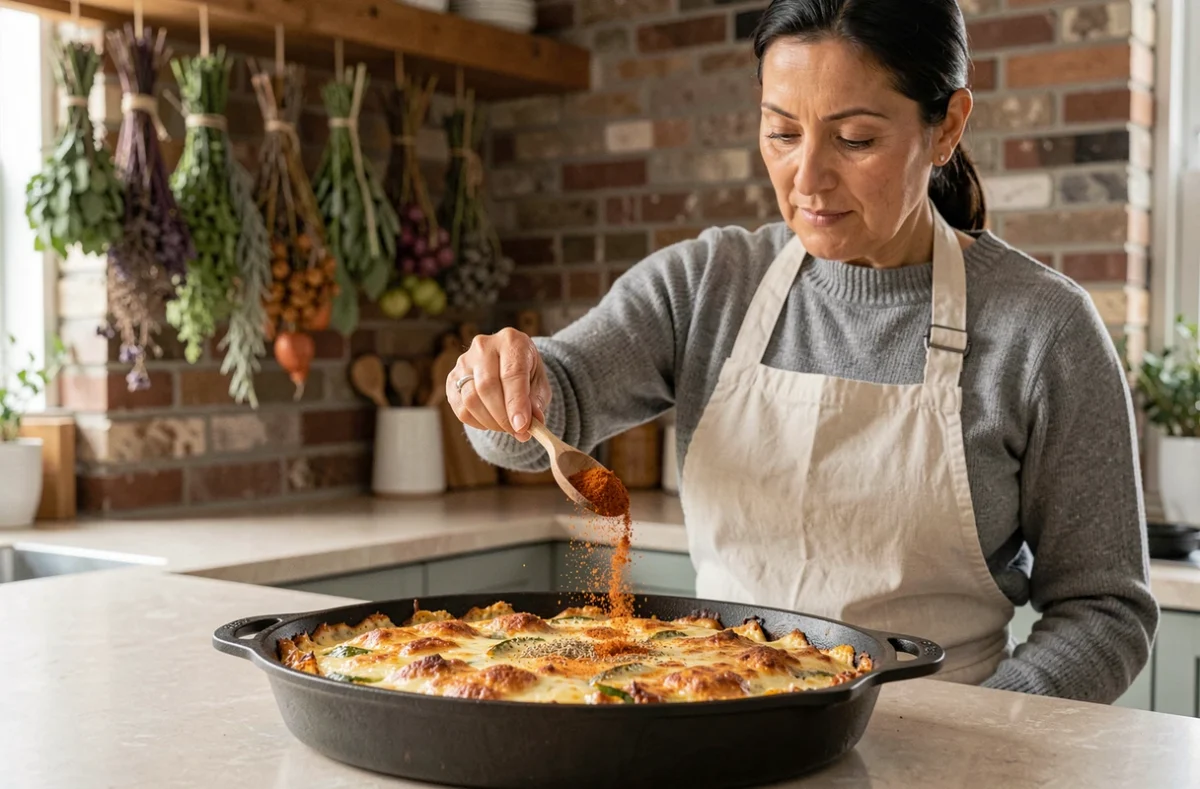
Reducing Salt with Spices: A Measurable Lever for Vegetables and Gratins
The seasoning of vegetables often relies on salt by reflex. Spices can help reduce salt without diminishing the acceptability of the dish. A zucchini gratin seasoned with cumin and paprika, for example, requires significantly less salt than a gratin seasoned only with pepper.
The mechanism is simple: aromatic compounds activate different taste receptors than sodium. The perceived result remains flavorful, sometimes even more so, because the range of flavors expands. Curry, which combines several spices (turmeric, coriander, cumin, ginger depending on the blends), particularly excels in this role in root vegetable gratins.
Three Concrete Associations to Decrease Salt
- Dauphinois gratin: replace half the salt with freshly grated nutmeg and a pinch of white pepper. The cream absorbs the aromas and compensates for the reduction in sodium.
- Oven-roasted vegetables: a mix of cumin seeds, crushed coriander, and a drizzle of olive oil before cooking. The fat captures the aromas, and the result is full of character.
- Squash gratin: mild curry incorporated into the sauce, paired with freshly grated ginger at the end of cooking. The heat of the curry and the brightness of the ginger create a depth that salt alone does not provide.
Acidity and Crunch: The Overlooked Seasoning of Gratins
One principle transforms a decent gratin into a memorable dish: the balance between richness and acidity. According to Kanteen (September 20, 2026), lemon, vinegar, or zest added after cooking balances the richness of a gratin or roasted vegetables.
A creamy potato gratin, no matter how well-spiced, can still feel heavy in the mouth. A few grated lemon zests on top just before serving are enough to lighten the perception. This is not about a lemony taste, but about a contrast that awakens the taste buds.
Crunch as an Aromatic Finish
The other underutilized dimension is texture. Kanteen also mentions roasted seeds or nuts as a source of contrast. On a vegetable gratin, a handful of sesame seeds or pine nuts toasted dry adds a crunch that highlights the spices used in the sauce.
The contrast in texture amplifies the perception of spicy flavors. Cumin present in the béchamel will be more noticeable if the surface of the gratin offers a crispy element. This interaction between texture and aroma explains why some gratins seem more fragrant than others, even with the same amount of spices.
Spice Safety: A Concrete Point of Vigilance
A reminder published on September 18, 2026, relayed by PasseportSanté and available on RappelConso, concerned berries sold in France due to a risk of Salmonella contamination. Such alerts are sporadic, but they remind us that the traceability of spices deserves as much attention as their flavor.
For organic powdered spices as well as ready-to-use blends, checking the expiration date and storage conditions (away from light and moisture) protects both the aromatic quality and food safety. Spices stored too long in an open cupboard lose their essential oils and become a potential breeding ground for mold.
The choice of spices for your vegetables and gratins is not limited to a fixed recipe. The timing of incorporation, the balance with acidity and texture, and even the freshness of the product used determine the result on the plate. A well-spiced vegetable gratin with roasted cumin, a hint of nutmeg in the béchamel, and a few lemon zests as a finish creates a flavorful dish with very little salt.