
In France, the legal framework surrounding parenthood is evolving. The new additional birth leave changes the game for families with a young child. At the same time, health recommendations regarding screens are becoming clearer, particularly those from the High Council of Public Health. Between these institutional guidelines and the reality of family life, parents navigate concrete constraints that go beyond generic advice on communication or organization.
Screens and Young Children: What French Health Guidelines Say
Content about family life often mentions screens in terms of time limitation. The French guidelines take a different approach. The High Council of Public Health advises against screens for children under three years old in the absence of parental interaction. The issue is less about a threshold of minutes than about the quality of adult support during usage.
The HCSP report from December 2019, summarized by Demeter Santé, also recommends avoiding screens in the hour before bedtime and not installing them in the child’s room. These two simple rules have a direct impact on sleep, a factor rarely addressed in articles about family well-being.
Several publications, including those shared on the family section of Je veux de l’info, discuss these parental topics from a practical angle, linked to the realities of daily life.
The concept of co-usage deserves to be highlighted: watching content with your child, commenting on what happens on screen, choosing a program together. Parental support transforms the screen into a medium for exchange rather than a source of isolation. For children over three years old, the guidelines emphasize the content viewed and the context of use more than a universal duration.
School-Free Days and Family Leisure Time Management
The Enabée study from Santé publique France, published in September 2025, highlights a concrete point: children’s screen time significantly increases on school-free days. Wednesdays, weekends, and holidays see more intensive usage, with marked differences among families.
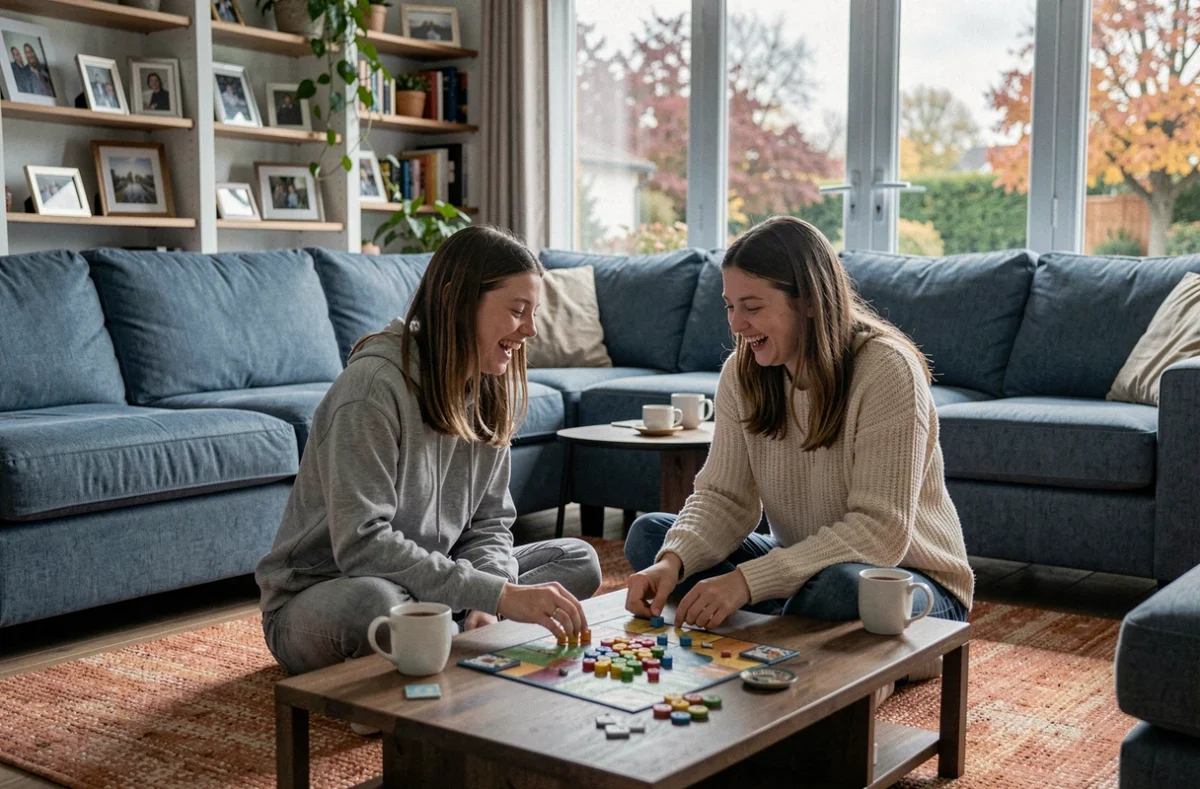
Planning alternative activities for these free days is not just a trivial suggestion. It involves anticipating an imbalance identified by public health data. Here are some concrete ideas:
- Prepare the evening before a short list of two or three activities that can be done without special materials (walk, drawing, simple cooking) to avoid the screen reflex first thing in the morning
- Alternate quiet times (reading, free play) and active times (outdoor outings, physical play), taking into account the child’s rhythm rather than a rigid schedule
- Involve the child in choosing activities as soon as they are able to express themselves, which reduces resistance and strengthens their decision-making autonomy
Anticipating free days reduces conflicts related to screens without turning the home into a recreation center. The goal remains to offer an accessible alternative, not to fill every minute.
Additional Birth Leave: What the Law Changes
An additional birth leave is added to existing provisions for employees. This measure directly concerns families welcoming a newborn. It alters the organization of the first weeks after birth, a period where parental presence has a documented effect on attachment.
For families, it is wise to check with their employer or collective agreement regarding the exact conditions applicable during this leave. Birth leave does not guarantee the maintenance of all benefits, and this nuance makes a difference in the financial planning of the first months.

Protecting Parent-Child Interactions from Digital Interruptions
The HCSP recommendations address an often-overlooked angle: “technoférence,” meaning the interruption of parent-child interactions by the adults’ own digital devices. The problem does not solely stem from the child’s screen time.
Checking your phone during a meal, a conversation, or a game with a young child fragments shared attention. For toddlers, these micro-disruptions disturb the flow of verbal and non-verbal exchange that structures their language development.
An immediately applicable rule: put the phone out of visual reach during meals and playtime. Not in your pocket, not turned over on the table, but in another room. The temptation to check a notification disappears when the object is no longer accessible.
This simple gesture requires no investment, no reorganization of daily life. It directly impacts the quality of parental presence, which remains the most frequently cited factor by early childhood professionals.
When Adults Set an Example
Children replicate the behaviors they observe. A parent who puts away their phone during shared times establishes a more effective implicit framework than a verbal rule. Adults’ digital usage shapes that of children long before the question of time limits arises.
A thriving family life is not just about abstract principles of communication or harmony. It plays out in specific daily choices: where to place a screen, how to occupy a rainy Wednesday, what rights to check before parental leave. These micro-decisions, supported by reliable guidelines, create a framework where each family member finds their place.