The West sector in feng shui is associated with the Metal element. Choosing the best colors for this area is not limited to applying white on a wall: the natural light of late afternoon, the function of the room, and the materials present radically change the energetic rendering of a theoretically correct shade.
Low-angle light and feng shui colors in the west: the parameter that guides overlook
A room oriented to the west receives warm, orange light for several hours in the late afternoon. This radiation alters the perception of the cool colors associated with Metal. A pearl gray on a color chart appears neutral and soothing, but bathed in sunset light, it shifts towards pink or salmon.
We recommend testing the shade directly on the concerned wall at three times: morning (indirect light), mid-afternoon (transition), and end of the day (direct exposure). Pure white, often cited as a reference color for Metal, can become blinding under this exposure. An off-white or light cream absorbs the warm light better while maintaining the Metal energy of the sector.
To balance your space with feng shui, it is essential to start from the actual light reality of the place before consulting a theoretical correspondence grid.
Metal Palette for the west sector: beyond white and gray
The colors of Metal cover a broader spectrum than the simple white-gray duo. Three families of shades work in this sector:
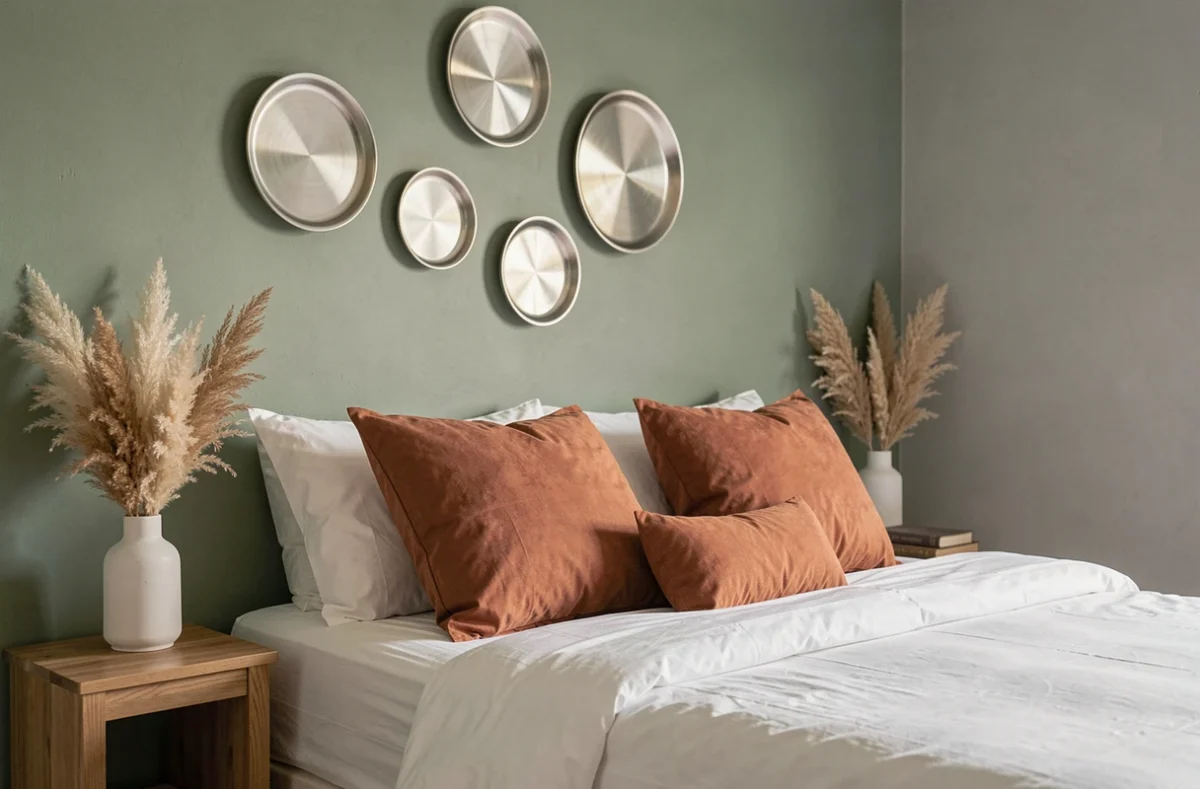
- Warm whites (cream, ivory, eggshell): they stabilize Metal energy without creating clinical coldness and resist better to the warm light from the west
- Soft grays (pearl gray, dove gray, silver gray): effective in a bedroom or office, they promote concentration and creativity, two attributes of the West sector
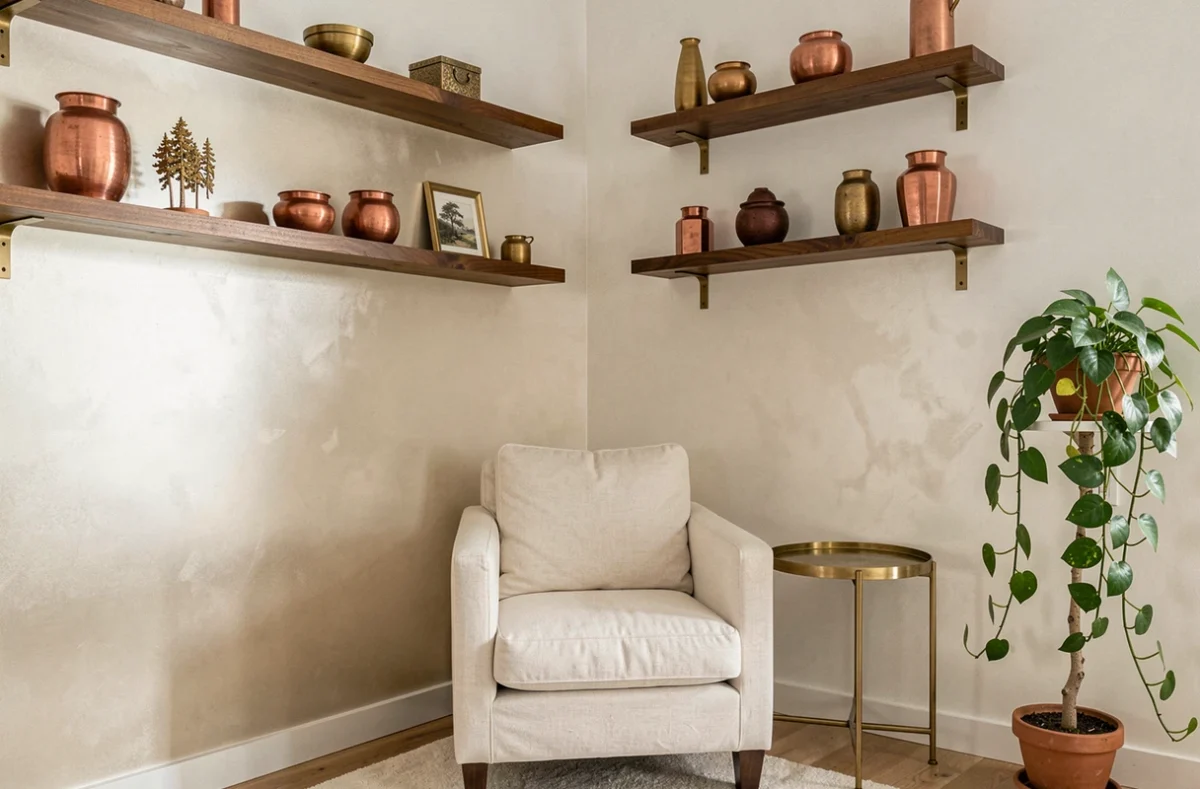
- Metallic tones (silver, pale gold, copper): used as accents on accessories or frames, they activate Metal energy without saturating the room
The Earth element nourishes Metal in the productive cycle of the five elements. Earthy shades (light ochre, sand beige, taupe) complete the basic palette by providing energetic support to the sector. We use them as secondary colors, on a wall section or a textile, to reinforce the area without destabilizing it.
Colors to avoid in the west zone in feng shui
The control cycle of the five elements provides a straightforward reading rule. Fire melts Metal: bright red, saturated orange, and fuchsia weaken this sector. A west-facing living room entirely painted in red creates tension between the dominant element (Metal) and the destructive element (Fire).
Deep blue and black, associated with Water, pose a different problem. Water drains Metal in the weakening cycle: Metal produces Water, and an excess of Water drains the energy of the sector. A touch of navy blue on a cushion or a vase remains acceptable. An entire night blue wall in a west room shifts the balance towards Water and reduces the creative capacity of the area.
The trap of monochrome accumulation
Saturating the west area with white and gray seems logical, but an excess of Metal rigidifies energy and creates a cold atmosphere. The theory of the five elements aims for harmonization, not accumulation. Introducing an Earth counterpoint (a beige ceramic pot, a natural fiber rug) restores the fluidity of chi without contradicting the Metal dominance.
Shapes and materials: necessary complements to feng shui color
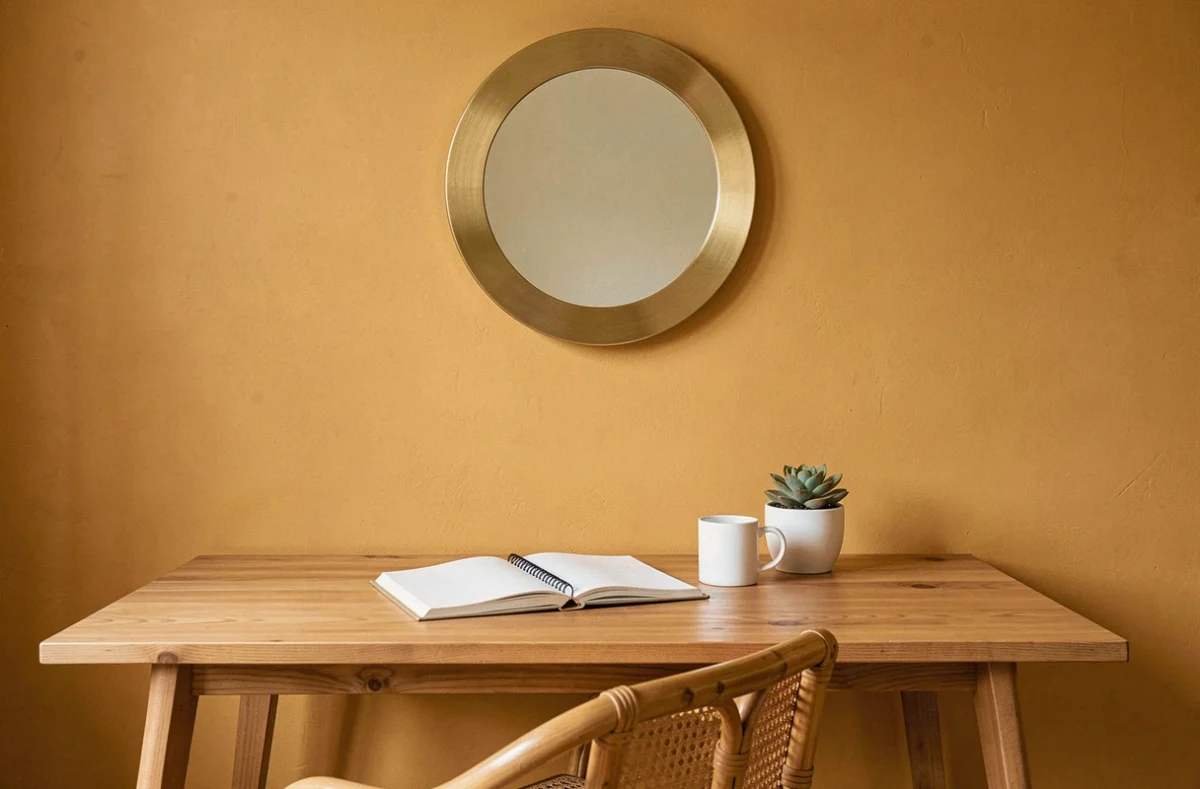
Color alone is not enough to activate the West sector. Circular and oval shapes are traditionally associated with the Metal element. A round mirror with a silver frame combines three levers: color (silver), shape (circle), and material (metal). This type of object focuses the activation of the sector on a precise point, avoiding the need to repaint the entire room.
Metal materials enhance the color palette of the sector. Brushed steel, brass, aluminum, copper: their physical presence brings a sensory dimension that paint alone cannot reproduce. A white metal shelf in a west office acts doubly on color and material.
- Mirrors with round or oval metal frames: strong activation of Metal through shape, material, and light reflection
- Ceramic objects in sand or ochre tones: support from the nourishing Earth element
- White or light gray textiles in natural fibers: soft grounding without visual overload
Adapting color to the function of the room
A west-facing bedroom calls for yin shades: dove gray, off-white, touches of beige. Rest requires soft Metal energy, not shiny. In contrast, a living room or creative studio in the west supports more silver reflections and light contrasts. The kitchen, if located in this sector, benefits from cream tones that temper the Fire energy of cooking appliances while respecting the Metal dominance.
The West sector remains one of creativity and projects. The ideal palette combines a light base (warm white or soft gray), Earth support (beige, ochre), and occasional metallic accents. Balance is built in layers, not through monochrome flatness. Observing the actual light of the room, integrating round shapes, and choosing materials consistent with the Metal element produces a more accurate result than a color grid applied without context.